 thenutritionwatchdog.com What's in your food? Discover which "healthy" foods are harming your health and which foods protect your body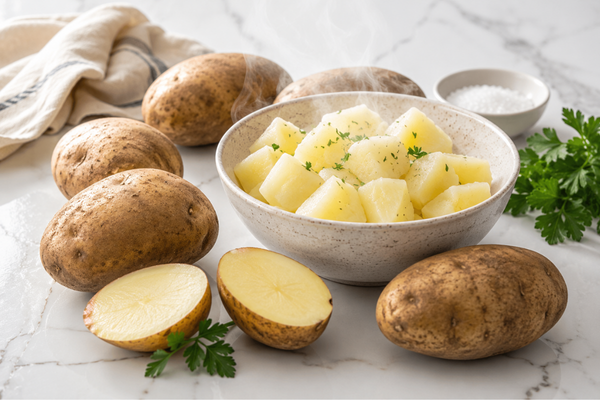
By: Mike Geary – Certified Nutrition Specialist and Author of The Diabetes Fix and The Truth About Testosterone
As a Nutritionist, I get asked about potatoes often! People love their potatoes, but they typically feel a little guilty thinking that potatoes might be bad for you.
Some people think that potatoes might be bad for their blood sugar, while others know that deep fried potatoes soaked in inflammatory seed oils are a health disaster.
So let me explain a little more about potatoes and how to make them so they can actually improve your health!
First, I think it’s obvious at this point that french fries soaked in oxidized omega-6 seed oils are not only a calorie bomb, but are soaked in one of the most toxic oils we can put in our bodies. I won’t elaborate on that in this email since it’s well established.
However, baked or boiled potatoes with just a small amount of grass fed butter and seasonings can be a nutrient-dense vitamin and mineral packed source of healthy carbohydrates that can not only be really good for your blood sugar, but also weight loss.
In fact, there are many studies showing that potatoes are one of the most satiating foods you can eat, and can help you eat less calories overall, while fulfilling a large amount of your micronutrient needs (vitamins and minerals).
There’s even case studies where individuals ate around 6 to 9 potatoes a day and lost a significant amount of weight (they had a hard time overeating on calories because the potatoes were so filling)…
As for blood sugar, while potatoes are a healthy source of carbs, Diabetics do need to monitor their blood sugar carefully. However, keep in mind that multiple studies show that high carb and low fat diets containing about 70-80% of the calories from carbohydrates and only 10-20% of the calories from fat resulted in a dramatic improvement in insulin sensitivity and a lowering of fasting blood sugar.
I’ll elaborate more in a newsletter coming soon on why such a high carb and low fat diet can produce such dramatic results for lowering blood sugar even in type 2 Diabetics, but the results are impressive with a good portion of participants getting off Diabetes medications in as little as 3-4 weeks. (Keep in mind that a keto diet can also work well for this too, despite being the opposite of a high carb and low fat diet)
Should you PEEL your potatoes?
This is an important one, and the false assumption by Dieticians and doctors for the past few decades was that because the skins contain micronutrients we should leave the skins on.
However, in my opinion, this is a BAD IDEA…
You see, the potato skins contain the largest amounts of problematic anti-nutrients such as oxalates, glycoalkaloids (solanine), and lectins.
White potatoes are from the nightshade family of plants, and do contain significant amounts of antinutrients that can cause gut issues, autoimmune reactions, as well as the contribution of oxalates to kidney stones.
And the lectins in potato skins can contribute to gut problems like inflammation, IBS/IBD, and leaky gut.
The vast majority of harmful antinutrients are in the SKIN… so always PEEL your potatoes.
Should you BOIL your potatoes?
Boiling your potatoes after peeling dramatically lowers the antinutrients such as lectins, oxalates, and glycoalkaloids, making your potatoes much easier on your body, but still packing a ton of vitamins and minerals and healthy carbohydrates.
I personally always peel and boil my potatoes as the healthiest way to cook them, and I add a small amount of grass fed butter, salt and bone broth to them.
Now that we’ve talked about why we should peel and boil our potatoes if we want to avoid many of these health issues, let’s look below at a unique way to HEAL your gut, get rid of gas and bloating, increase energy, and lose fat more easily…
Sweet Potato vs Pasta vs Squash (the #1 WORST starch for your gut & energy)
According to the best-selling author and world-renowned heart surgeon, Dr. Steven Gundry, there’s one starch people over 40 should never eat.
This starch can damage your gut and disrupt your hormones… It contains a toxin that damages the lining of your intestines, causes bloating, embarrassing gas, and a bulging belly.
Do you know the starch I’m talking about? Make sure you do by clicking the one below you think it is, and get the answer from Dr. Gundry himself on the next page:
